HIP & KNEE
Complex & Revision Joint Replacement
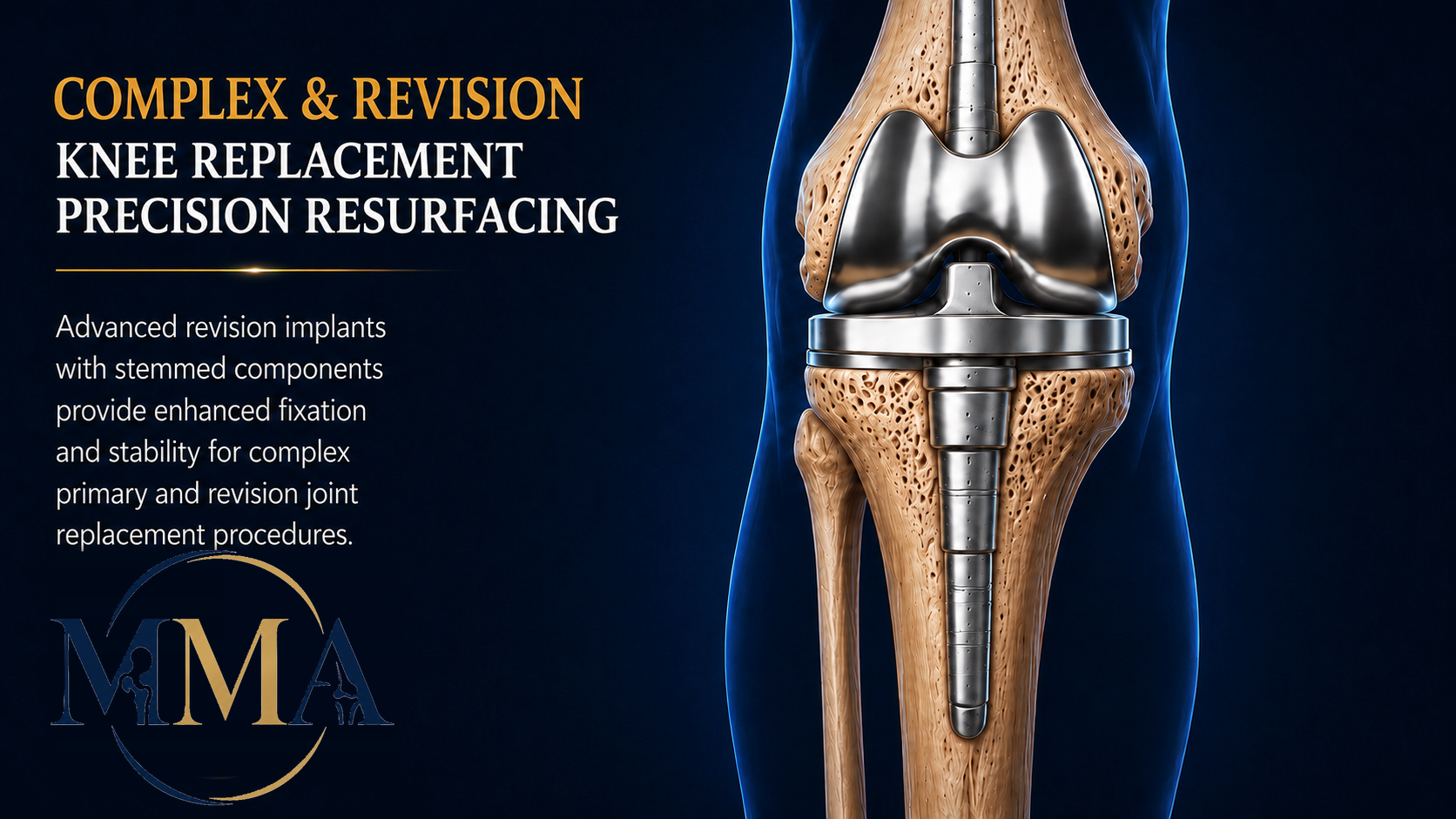
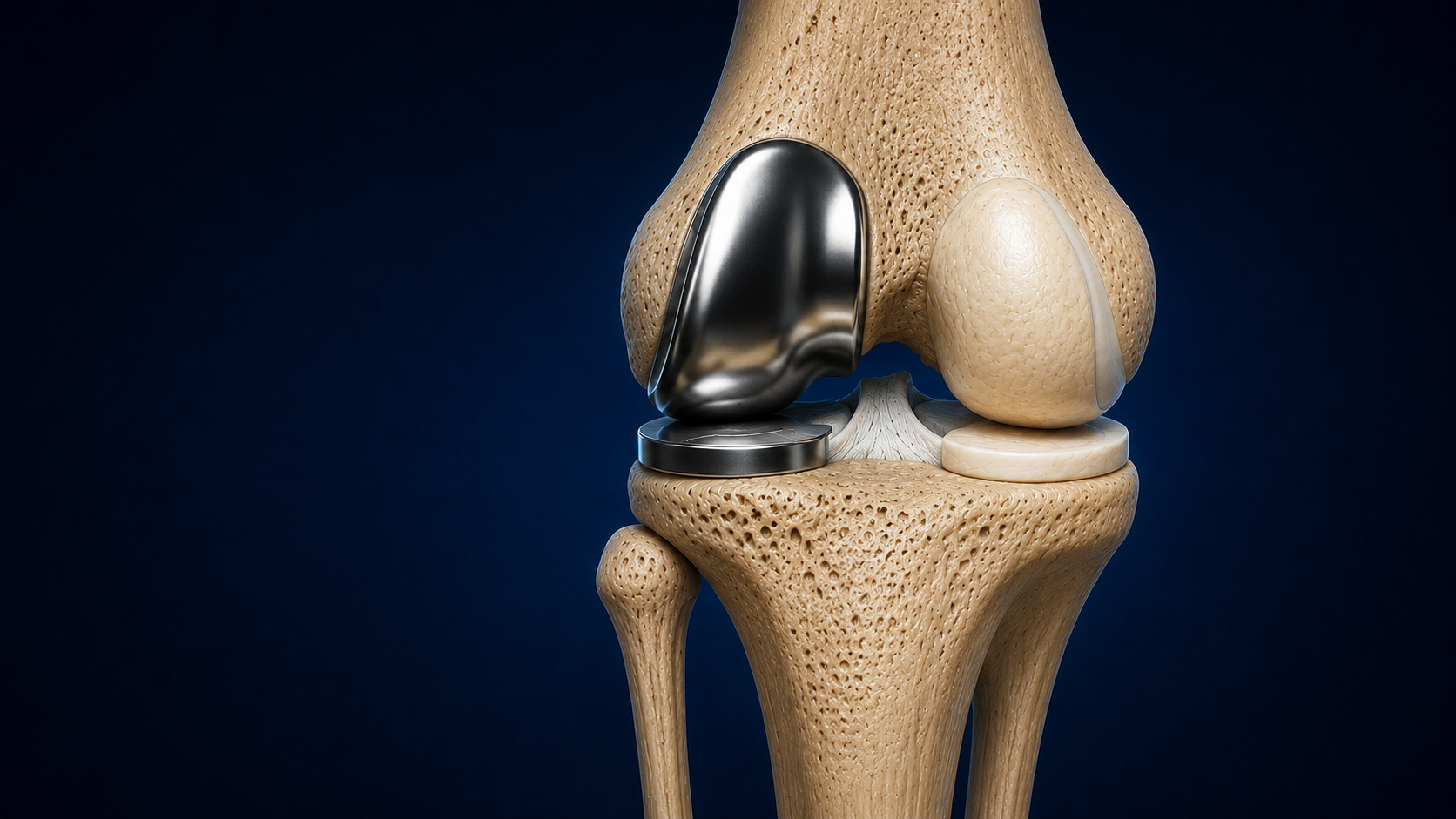
Most hip and knee replacements are considered "primary" procedures — the first time that joint has been replaced. Complex primary and revision joint replacement is a different category of surgery entirely, reserved for challenging anatomy or previously replaced joints that now need to be rebuilt.
What makes a case "complex"
A complex primary case might involve significant bone deformity, prior fractures, prior hardware, or unusual anatomy that a standard primary replacement technique wasn't designed for. These cases require more extensive pre-operative planning and, frequently, specialized implants beyond what's used in a routine primary replacement.
What revision surgery involves
Revision surgery replaces an implant that was placed in a prior joint replacement — because of wear, loosening, infection, instability, or a periprosthetic fracture. It is a longer and more technically demanding procedure than primary replacement: removing a well-fixed implant while preserving as much of the patient's remaining bone as possible is a meticulous process, and rebuilding bone loss around the joint often requires metal augments, bone graft, or custom implants.
Because of this added complexity, revision surgery carries a higher risk profile than primary replacement, and pre-operative workup is more involved — often including advanced imaging and, when infection is suspected, joint fluid analysis before surgery is even scheduled.
Why subspecialization matters here
Complex and revision cases are exactly where a surgeon's case volume and focus make the biggest difference. A practice dedicated specifically to hip and knee reconstruction — rather than general orthopedics — sees the bone-loss patterns, prior-hardware challenges, and instability issues that come up in these cases far more often, which shapes both surgical planning and outcomes.
This is one of several hip and knee replacement approaches offered, each selected based on your specific anatomy and goals.
Sources
See if this approach is right for you
Schedule a consultation to discuss your imaging, symptoms, and goals.
Request a Consultation