KNEE · MINIMALLY INVASIVE
Muscle/Tendon Sparing Subvastus Total Knee Replacement
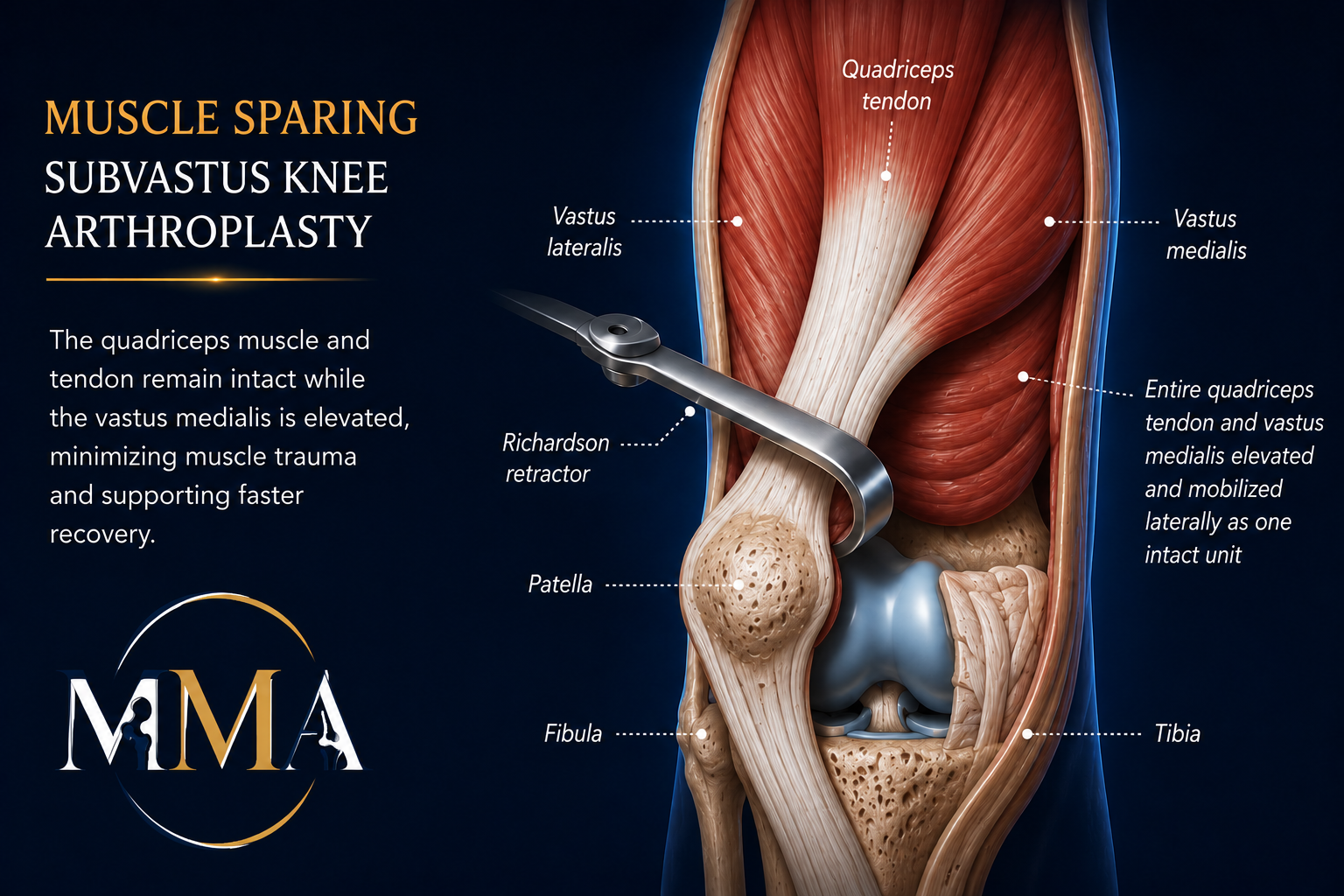
If you're facing knee replacement, the surgical approach your surgeon uses matters as much as the implant itself. The muscle/tendon sparing subvastus approach is a technique that works below the quadriceps tendon instead of cutting through it — and that single difference changes how your knee feels in the first weeks after surgery.
What makes the subvastus approach different
Traditional total knee replacement is typically performed through a medial parapatellar approach, which involves an incision through the quadriceps tendon to access the joint. The subvastus approach instead enters below ("sub") the vastus medialis muscle, leaving the tendon and the muscle-tendon junction undisturbed.
Because the quadriceps mechanism is not cut, patients tend to retain more quad strength immediately after surgery. That's clinically meaningful: quad strength is what lets you straight-leg raise, get out of a chair, and climb stairs safely in the first days after surgery.
What this means for your recovery
In appropriately selected patients, the subvastus approach has been associated with less early postoperative pain, reduced analgesic requirements, and a shorter hospital stay compared with the standard approach.
It's worth being direct about the tradeoffs: the subvastus approach requires more surgical experience to execute well, and it isn't the right fit for every knee. Patients with very limited pre-operative range of motion, significant obesity, or prior knee surgery may be better served by a different approach. Part of a good pre-surgical evaluation is determining which technique fits your anatomy — not applying one approach to every patient.
Is this approach right for you?
The best way to find out is a hands-on evaluation of your knee, your activity goals, and your imaging. If you're a candidate, this muscle-sparing technique can mean an easier first two weeks and a faster return to the activities that matter to you.
This is one of several hip and knee replacement approaches offered, each selected based on your specific anatomy and goals.
Sources
See if this approach is right for you
Schedule a consultation to discuss your imaging, symptoms, and goals.
Request a Consultation